
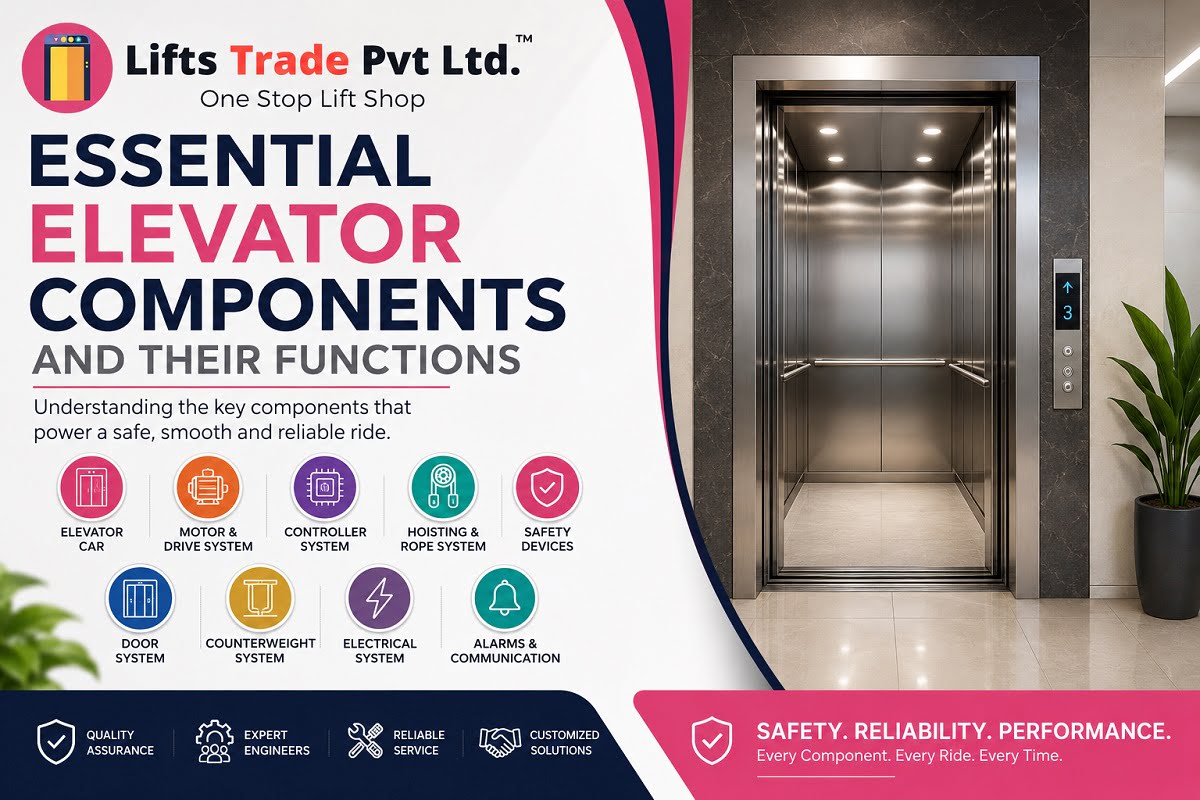
Elevators have transformed the way people move within buildings, making vertical transportation safe, efficient, and convenient. From residential apartments and office towers to hospitals, shopping malls, hotels, and industrial facilities, elevators have become an essential part of modern infrastructure.
While most passengers simply press a button and travel between floors, a sophisticated combination of mechanical, electrical, and safety systems works behind the scenes to ensure a smooth and secure ride. Every component within an elevator system plays a specific role, contributing to performance, passenger safety, energy efficiency, and long-term reliability.
Understanding elevator components and their functions helps building owners, architects, facility managers, and property developers make informed decisions regarding installation, maintenance, modernization, and repairs. At Lifts Trade Pvt Ltd, we believe that knowing how elevator systems operate enables better maintenance planning and improved equipment longevity.
Understanding How Elevator Systems Work
An elevator is a carefully engineered system consisting of multiple interconnected components that function together to transport passengers or goods vertically within a building.
Each component is designed to perform a specific task, and the overall performance of the elevator depends on the proper functioning of every part. Whether it is the motor generating lifting power, the controller managing operations, or the safety devices protecting passengers, every element contributes to reliable elevator operation.
Modern elevator systems combine advanced technology, intelligent controls, energy-efficient mechanisms, and robust safety features to deliver a seamless transportation experience.
Elevator Car: The Passenger Transport Unit
The elevator car, commonly referred to as the cabin, is the compartment that carries passengers or freight between floors.
Purpose of the Elevator Car
The elevator car provides a safe and comfortable space for transportation while accommodating the required passenger or load capacity.
It is designed to offer:
- Passenger safety
- Comfortable travel
- Accessibility compliance
- Interior aesthetics
- Structural durability
Modern Elevator Cabin Features
Today’s elevator cabins often include:
- Stainless steel finishes
- Decorative wall panels
- LED lighting systems
- Handrails
- Digital floor displays
- Voice announcements
- Ventilation systems
- Accessibility features
The elevator cabin is the most visible component and significantly influences the passenger experience.
Elevator Controller: The Brain of the System
The controller serves as the command center of the elevator.
What Does the Controller Do?
The controller processes information and coordinates every movement of the elevator system.
Its responsibilities include:
- Receiving floor requests
- Controlling elevator speed
- Managing door operations
- Monitoring safety systems
- Optimizing travel efficiency
- Handling emergency responses
Importance of Smart Controllers
Modern controllers improve:
- Operational accuracy
- Traffic management
- Energy efficiency
- Ride quality
- System diagnostics
Advanced controllers are essential for ensuring smooth and reliable elevator operation.
Elevator Motor: The Driving Force
The motor provides the power required to move the elevator.
Function of the Elevator Motor
The motor generates the mechanical force needed to lift and lower the elevator car.
It works in coordination with:
- Drive systems
- Controllers
- Braking mechanisms
- Suspension systems
Benefits of High-Quality Elevator Motors
Efficient motors provide:
- Smooth acceleration
- Reduced energy consumption
- Quiet operation
- Improved reliability
- Longer service life
The motor directly influences elevator performance and operational costs.
Hoisting Machine: Converting Power into Motion
The hoisting machine transfers motor power into controlled elevator movement.
Role of the Hoisting Machine
The hoisting machine moves the elevator by controlling the rotation of ropes or belts connected to the elevator car and counterweight.
It ensures:
- Controlled movement
- Precise speed regulation
- Smooth operation
- Safe transportation
Why It Is Important
A properly functioning hoisting machine helps maintain:
- Passenger comfort
- Equipment efficiency
- Accurate floor leveling
- Reduced wear on components
Counterweight: Enhancing Efficiency
The counterweight is a vital component in traction elevator systems.
Purpose of the Counterweight
The counterweight balances the elevator car and a portion of its load.
This balance significantly reduces the energy required to move the elevator.
Benefits of a Counterweight System
Advantages include:
- Lower energy consumption
- Reduced motor workload
- Enhanced operational efficiency
- Extended equipment lifespan
Without a counterweight, elevator systems would require considerably more power to operate.
Guide Rails: Maintaining Stability
Guide rails provide directional support for the elevator car and counterweight.
Function of Guide Rails
Guide rails ensure that the elevator travels smoothly along a predetermined vertical path.
They help:
- Prevent excessive movement
- Maintain alignment
- Reduce vibration
- Improve ride comfort
Importance in Elevator Safety
Guide rails contribute to:
- Stable operation
- Passenger confidence
- Accurate positioning
- Mechanical reliability
Elevator Doors: Safe Access Control
Elevator doors allow passengers to enter and exit safely.
Types of Elevator Doors
Common configurations include:
- Center-opening doors
- Side-opening doors
- Telescopic doors
- Automatic sliding doors
Functions of Elevator Doors
Elevator doors provide:
- Controlled access
- Passenger safety
- Efficient traffic flow
- Security and protection
Door systems are among the most frequently used components and require regular maintenance.
Door Operator System: Intelligent Door Movement
The door operator controls how elevator doors open and close.
Primary Responsibilities
The system manages:
- Opening speed
- Closing speed
- Obstruction detection
- Timing coordination
Advantages of Modern Door Operators
Modern systems offer:
- Smooth operation
- Enhanced safety
- Reduced wear
- Energy efficiency
Reliable door operation significantly impacts user satisfaction and system performance.
Safety Sensors: Protecting Passengers
Safety sensors are essential for preventing accidents and ensuring smooth operation.
What Do Safety Sensors Do?
They monitor various conditions within the elevator system.
Typical functions include:
- Detecting obstacles
- Monitoring door zones
- Tracking elevator position
- Preventing unsafe operation
Benefits of Safety Sensors
These devices help:
- Prevent injuries
- Improve reliability
- Reduce operational errors
- Enhance passenger confidence
Modern sensors form a critical part of elevator safety systems.
Governor System: Overspeed Protection
The governor monitors elevator speed and activates safety mechanisms when necessary.
How the Governor Works
If the elevator exceeds safe operating speed, the governor detects the condition and triggers emergency safety systems.
Why It Is Essential
The governor provides:
- Overspeed protection
- Emergency intervention
- Passenger safety
- Regulatory compliance
It serves as one of the most important safety features in any elevator system.
Safety Gear: Emergency Stopping Mechanism
Safety gear works together with the governor to prevent uncontrolled elevator movement.
Function of Safety Gear
When activated, the safety gear grips the guide rails and brings the elevator to a controlled stop.
Importance for Passenger Protection
Safety gear helps protect occupants during:
- Mechanical failures
- Overspeed incidents
- Unexpected operational faults
This system serves as a critical backup safety measure.
Braking System: Controlled Stopping and Holding
The braking system ensures safe stopping and stationary positioning.
Main Functions
Elevator brakes:
- Stop the elevator accurately
- Hold the cabin securely
- Prevent unintended movement
Benefits of Reliable Brakes
Quality braking systems improve:
- Passenger safety
- Ride quality
- Floor-level accuracy
- Operational reliability
Regular brake inspections are essential for maintaining elevator performance.
Suspension Ropes and Belts: Supporting Movement
Elevator ropes or belts connect the elevator car to the hoisting system.
Purpose of Suspension Systems
These components transfer lifting force while supporting the weight of the elevator car and passengers.
Key Characteristics
High-quality suspension systems provide:
- Exceptional strength
- Long-term durability
- Reliable performance
- Enhanced safety
Routine inspections help identify wear before operational issues develop.
Floor Selection Panels and Call Stations
Passenger interface systems allow users to communicate with the elevator.
Functions of Control Panels
Passengers use these systems to:
- Call the elevator
- Select floors
- Access emergency functions
Modern Innovations
Advanced systems may include:
- Touchless controls
- Smart destination dispatch
- Mobile app integration
- Voice-assisted controls
These technologies improve convenience and traffic management.
Emergency Communication Systems
Emergency communication devices ensure passenger assistance is available when needed.
Why Communication Systems Matter
They provide a direct connection between passengers and support personnel.
Typical Features
Modern elevators may include:
- Emergency alarms
- Intercom systems
- Remote communication modules
- Monitoring center connectivity
These systems increase passenger confidence and safety.
Electrical and Backup Power Systems
Reliable electrical infrastructure is essential for elevator operation.
Main Electrical Functions
Power systems support:
- Motors
- Controllers
- Lighting
- Communication devices
- Safety systems
Emergency Power Solutions
Modern elevators often include:
- Battery backup systems
- Automatic rescue devices
- Emergency lighting
These features help maintain safety during power interruptions.
Importance of Regular Maintenance for Elevator Components
Even the most advanced elevator systems require routine maintenance.
Benefits of Preventive Maintenance
Scheduled maintenance helps:
- Reduce breakdowns
- Improve reliability
- Extend component lifespan
- Maintain safety standards
- Lower repair costs
Components That Require Routine Inspection
Maintenance programs should focus on:
- Motors
- Controllers
- Brakes
- Doors
- Safety devices
- Electrical systems
- Suspension ropes
Consistent maintenance protects both passengers and equipment investments.
How Lifts Trade Pvt Ltd Ensures Elevator Reliability
At Lifts Trade Pvt Ltd, we understand that elevator performance depends on the quality and condition of every component.
Advanced Engineering Solutions
Our elevator systems are designed using modern technologies that maximize efficiency and reliability.
High-Quality Components
We utilize dependable components engineered to meet industry standards and long-term operational requirements.
Comprehensive Maintenance Services
Our maintenance programs help identify potential issues before they become costly problems.
Customized Elevator Solutions
We provide tailored solutions for residential, commercial, industrial, hospital, hotel, and institutional projects.
Conclusion
Every elevator is a sophisticated combination of mechanical, electrical, and safety components working together to provide safe and efficient vertical transportation. From controllers and motors to guide rails, safety devices, doors, and communication systems, each element plays a critical role in overall elevator performance.
Understanding these essential elevator components and their functions helps building owners and facility managers make informed decisions regarding installation, maintenance, modernization, and long-term asset management.
Lifts Trade Pvt Ltd is committed to delivering reliable elevator solutions built on quality engineering, advanced technology, and professional service support. By investing in high-quality components and regular maintenance, property owners can ensure safe, efficient, and dependable elevator operation for years to come.
Frequently Asked Questions
What are the essential components of an elevator?
The main elevator components include the elevator car, controller, motor, hoisting machine, counterweight, guide rails, doors, safety devices, braking system, ropes, and communication systems.
What is the function of an elevator controller?
The controller manages elevator movement, floor selection, speed regulation, door operations, and safety monitoring, making it the central control unit of the system.
Why is the counterweight important in an elevator?
The counterweight balances the elevator car and load, reducing motor workload and improving energy efficiency.
How do guide rails contribute to elevator performance?
Guide rails provide stability, maintain alignment, reduce vibration, and ensure smooth vertical movement.
What safety systems are found in modern elevators?
Modern elevators include governors, safety gear, braking systems, sensors, emergency communication devices, and backup power solutions.
Why are elevator doors considered critical components?
Elevator doors control passenger access, improve safety, and help maintain efficient building traffic flow.
How often should elevator components be inspected?
Elevator components should be inspected regularly according to maintenance schedules, usage levels, and applicable safety regulations.
Why choose Lifts Trade Pvt Ltd for elevator solutions?
Lifts Trade Pvt Ltd offers advanced elevator systems, high-quality components, professional installation, modernization services, preventive maintenance programs, and reliable technical support tailored to diverse building requirements.