
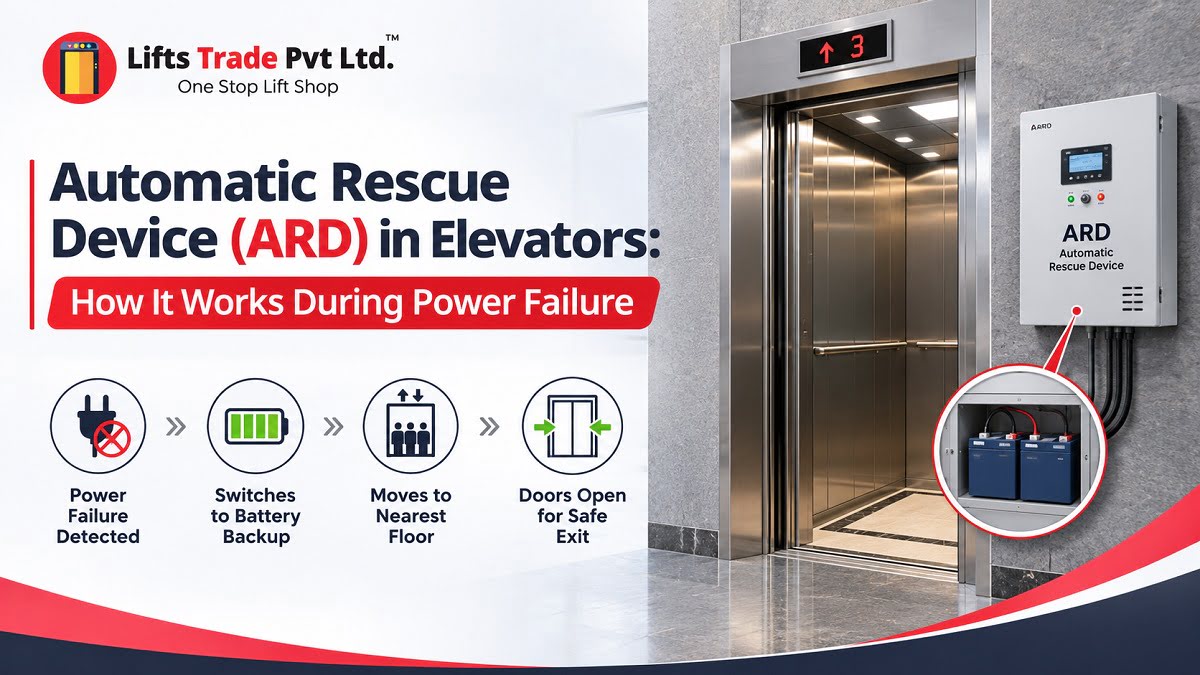
An unexpected power failure can interrupt elevator operation and leave passengers waiting inside a lift between floors. In buildings where elevators are used throughout the day, this situation can create inconvenience and raise immediate safety concerns. An Automatic Rescue Device (ARD) is designed to address this problem by helping the elevator complete a controlled rescue operation when its normal electrical supply is interrupted.
An elevator ARD uses stored battery power and a compatible control arrangement to move the lift car towards a suitable landing under defined operating conditions. Once the car reaches the landing and the rescue sequence is completed, the doors open so passengers can leave the elevator safely.
For lift manufacturers, installation contractors, dealers and maintenance companies, understanding how an ARD works is important when selecting emergency equipment for an elevator project. The device must be compatible with the elevator motor, controller, electrical configuration and safety circuits.
This guide explains the working principle of an elevator Automatic Rescue Device, its major components, operation during a power outage, benefits, selection factors and maintenance considerations.
What Is an Automatic Rescue Device (ARD) in an Elevator?
An Automatic Rescue Device is an emergency battery-powered arrangement designed to help an elevator reach a suitable floor when the main power supply fails during normal operation.
Under normal conditions, the elevator operates using the building’s regular electrical supply. The ARD remains in standby mode while its battery system is maintained in a charged condition. When the device detects a qualifying power interruption, it activates the configured rescue sequence.
Depending on the elevator design and ARD configuration, the system may:
- Detect a failure in the main electrical supply.
- Switch to its emergency battery power source.
- Supply the required power to the compatible elevator drive and control system.
- Move the elevator car towards a suitable landing at a controlled speed.
- Stop the car within the landing zone.
- Initiate the door-opening sequence.
- Return to standby after the rescue operation is completed.
The purpose of an ARD is passenger evacuation during a power interruption. It is not necessarily designed to keep the elevator available for regular passenger service throughout an extended power outage.
How Does an Elevator ARD Work During Power Failure?
An elevator ARD works through a coordinated sequence involving power monitoring, battery operation, elevator movement and door control. The exact sequence depends on the lift controller, motor technology and the manufacturer’s approved design.
1. Monitoring the Main Power Supply
During normal elevator operation, the ARD continuously monitors the incoming electrical supply. Its monitoring arrangement checks for conditions that may interrupt normal lift operation, such as a complete power failure or certain phase-related supply problems.
The battery charging circuit maintains the battery at the required charge level so that emergency power is available when needed.
2. Detecting a Power Interruption
When the main supply becomes unavailable or an eligible electrical fault is detected, the ARD identifies the abnormal condition and initiates the emergency sequence.
The changeover arrangement transfers the required electrical supply from the normal source to the battery-powered emergency system. The timing and switching method depend on the ARD design and its integration with the elevator controller.
3. Activating the Battery Backup
The battery bank supplies DC power to the ARD’s power conversion section. The inverter or other specified power electronics convert this stored energy into an electrical output suitable for the connected elevator system.
The required output must match the lift’s electrical and operational requirements. This is why an ARD cannot be selected only by looking at the battery voltage or the elevator’s advertised capacity.
4. Moving the Elevator Towards a Landing
After the emergency power supply becomes available, the elevator controller manages the rescue movement.
The system may move the car towards the nearest suitable landing or another landing defined by the approved rescue logic. Some configurations use load-related direction selection to determine an appropriate direction of movement.
The lift generally operates under a controlled rescue mode rather than its normal passenger-service mode. Its speed, movement and stopping sequence are governed by the elevator control system.
5. Stopping and Levelling at the Landing
The elevator must identify the correct landing position before the doors can be opened.
The controller uses the configured floor-positioning and levelling arrangement to bring the car into the landing zone. Accurate stopping is important because a height difference between the elevator floor and building floor can create a tripping hazard.
The rescue sequence should not bypass the elevator’s required safety checks to achieve a landing.
6. Opening the Elevator Doors
After the car has reached the permitted landing position, the control system initiates the door-opening sequence.
Passengers can then leave the elevator through the landing entrance. The ARD completes its intended rescue function and generally remains inactive until normal power returns or the system is reset according to its design.
7. Returning to Normal Operation
When the main electrical supply becomes stable again, the elevator’s approved changeover arrangement restores normal power operation.
The ARD returns to standby, and its charging circuit replenishes the battery. The lift should resume normal service according to the controller’s recovery and safety logic.
Main Components of an Elevator ARD System
An ARD is not simply a battery connected to an elevator motor. It consists of several electrical and control components that work together to perform the rescue operation.
Battery Bank
The battery bank stores the electrical energy required during an emergency. Its capacity must be selected according to the elevator’s power demand, rescue sequence and specified operating requirements.
Battery condition is particularly important because reduced capacity can affect the device’s ability to complete a rescue operation.
Battery Charger
The charger maintains the battery’s charge during normal operation. It regulates the charging process according to the battery type and the manufacturer’s specifications.
A suitable charger helps keep the backup system ready without exposing the battery to inappropriate charging conditions.
Inverter or Power Conversion Unit
The inverter converts stored battery power into the output required by the elevator system. Depending on the design, the power electronics may also regulate voltage, frequency or other electrical characteristics.
The output configuration must be compatible with the connected elevator drive and control equipment.
Main Supply Monitoring Circuit
This circuit monitors the normal electrical supply and identifies conditions that require the ARD to activate.
The monitoring arrangement may include protection against phase failure, abnormal voltage or other supply conditions supported by the particular model.
Changeover and Switching Arrangement
The switching arrangement manages the transition between normal electrical power and emergency power.
It must be designed to coordinate correctly with the elevator controller and drive, preventing an unsafe or conflicting power connection.
Control and Protection Circuit
The control circuit manages the rescue sequence and coordinates the operation of the ARD with the lift system.
Depending on the design, protective functions may include battery undervoltage monitoring, output overload protection, short-circuit protection and fault indication.
Status Indicators and Alarm
Status indicators help technicians understand the device’s operating condition. Depending on the model, they may show normal supply, battery charging, emergency operation, low battery or fault conditions.
Passenger-facing audio-visual indications and emergency lighting are also important parts of the elevator’s overall emergency arrangement.
Types of Automatic Rescue Devices Used in Elevators
ARD systems are available in different electrical configurations. The suitable option depends on the elevator’s motor, controller, power supply and project requirements.
Single-Phase Output ARD
Some ARD systems provide a single-phase emergency output for compatible elevator configurations. Their suitability depends on the motor and controller design.
A single-phase output should not be assumed to support every type of lift motor or drive system.
Three-Phase Output ARD
Three-phase ARD systems are designed for elevator configurations that require a three-phase emergency supply. They may use power electronics to generate the required output from the battery bank.
The voltage, frequency, current capacity and control interface must be checked against the elevator manufacturer’s requirements.
Integrated ARD System
Some elevator controllers and emergency power arrangements are designed with integrated rescue functionality. In such configurations, the emergency power and control functions are coordinated as part of the overall lift system.
An integrated solution can simplify system coordination, provided that all equipment is selected and commissioned according to the approved design.
Difference Between ARD, Elevator UPS and Generator Backup
ARD, UPS and generator systems are all associated with emergency power, but they do not necessarily perform the same function.
| Feature | Automatic Rescue Device | Elevator UPS | Generator Backup |
|---|---|---|---|
| Main purpose | Controlled passenger rescue | Backup power for a defined period | Supply power to selected building loads |
| Energy source | Battery bank | Battery bank | Fuel-powered generator |
| Typical operation | Moves the lift to a suitable landing | May support continued operation, depending on design | May support selected elevator operation after changeover |
| Operating duration | Intended rescue sequence | Depends on UPS and battery capacity | Depends on generator capacity and fuel availability |
| System integration | Must coordinate with lift controller | Must match elevator drive and electrical design | Requires suitable generator and changeover arrangements |
An ARD is generally selected when the requirement is to evacuate passengers after a power interruption. A UPS or generator arrangement may be more appropriate when a project requires continued elevator operation for a longer period.
The final choice should be based on the building’s electrical design, lift configuration, emergency requirements and applicable regulations.
Important Safety Features of an Elevator ARD
A properly designed and integrated ARD should support the elevator’s existing safety functions rather than replace them.
Continuous Safety Circuit Monitoring
The elevator’s safety circuits must remain effective during the rescue operation. The rescue sequence should proceed only when the required safety conditions are satisfied.
If a safety-related fault prevents movement, the system must follow the approved fault response rather than force the lift to travel.
Controlled Landing and Levelling
The car should stop within the specified landing accuracy. This helps passengers leave the lift without encountering an unsafe difference in floor height.
Battery Protection
Battery monitoring and protection help identify conditions such as low battery voltage or abnormal operation. These features also assist maintenance personnel in identifying problems before an emergency occurs.
Emergency Lighting and Passenger Indication
Passengers should be able to see inside the elevator during an emergency. An appropriate emergency light arrangement and audio-visual indication help communicate that the lift is operating in rescue mode.
Alarm and Communication Arrangement
An emergency alarm and suitable communication facility allow passengers to seek assistance and communicate with building personnel.
The ARD is only one part of the elevator’s overall emergency safety arrangement.
Benefits of Installing an ARD in an Elevator
Helps Release Passengers After a Power Failure
The main benefit of an ARD is that it can reduce the time passengers remain inside a stalled elevator by moving the car to a suitable landing under the designed rescue sequence.
Supports Passenger Confidence
A properly functioning rescue arrangement provides an additional layer of reassurance for people using elevators in residential, commercial, hospital and office buildings.
Reduces Dependence on Manual Rescue for Power Interruptions
When the system is operating correctly and the conditions permit rescue movement, it can complete the configured evacuation sequence automatically. This reduces the need to wait for a technician to manually move the car for an ordinary power-failure rescue.
It does not remove the need for trained personnel or an established emergency response procedure.
Supports Elevator Emergency Planning
An ARD can form part of a building’s wider emergency preparedness plan. It should be coordinated with alarms, communication systems, emergency lighting and building management procedures.
Useful in Areas With Unstable Electrical Supply
Buildings that experience supply interruptions may benefit from a suitable emergency rescue arrangement. However, frequent or prolonged outages may require a separate evaluation of generator or longer-duration backup power.
How to Choose the Right ARD for an Elevator
Selecting an ARD requires more than matching the device to the elevator’s floor count. The electrical characteristics and control requirements of the lift must be considered before placing an order.
Check the Elevator Motor Rating
Confirm the motor’s rated power, voltage, current and type. The ARD must be capable of supporting the connected elevator system during the required rescue sequence.
Confirm the Lift Controller and Drive Compatibility
Different elevator controllers and variable-frequency drives may have different power and control requirements.
Before selecting an ARD, obtain the controller model, drive details and relevant electrical documentation. Confirm compatibility with the elevator manufacturer or authorised technical team.
Identify the Electrical Supply Configuration
Check whether the lift uses a single-phase or three-phase supply and confirm the emergency output required by the system.
The input supply, output voltage, frequency and switching arrangement should all be reviewed.
Evaluate the Battery Capacity
Battery sizing should consider the electrical load during rescue, the required rescue travel, battery condition and the specified number of operations.
A battery bank that is too small may not provide sufficient energy to complete the intended rescue sequence.
Check the Rescue Direction and Control Logic
Understand how the system determines the direction of movement, how it identifies the landing zone and how it controls the door-opening sequence.
These functions must be compatible with the elevator’s design and operating conditions.
Review Protection and Indication Features
Check the availability of suitable battery protection, overload protection, fault indication and passenger emergency alerts.
Also confirm how the ARD indicates a low battery condition and how technicians can identify system faults.
Confirm Installation and Service Support
The selected equipment should come with appropriate technical documentation, wiring information and installation instructions.
The installer should be familiar with the lift controller and the ARD’s approved integration method.
Common Problems That Can Affect ARD Performance
An ARD may fail to complete a rescue operation if its batteries, electrical connections or integration with the elevator are not in suitable condition.
Weak or Aged Batteries
Battery ageing and loss of capacity can reduce the energy available during an emergency. A battery may show a normal charging indication but still fail to deliver the required performance under load.
Incorrect ARD Sizing
An undersized device may not be suitable for the connected motor and drive. Incorrect selection can lead to overload, voltage problems or an incomplete rescue sequence.
Loose Electrical Connections
Loose terminals, damaged cables and poor electrical connections can interrupt the power supply or affect the changeover process.
Incompatible Controller or Drive
An ARD that has not been properly matched with the elevator controller may not communicate or operate as intended.
Charging Circuit Faults
A faulty charger can prevent the batteries from reaching or maintaining the required charge level.
Incorrect Configuration
Incorrect parameters, wiring or commissioning settings may affect rescue direction, floor detection, levelling or door operation.
These issues should be investigated by qualified elevator technicians. Building staff and passengers should never attempt to open electrical cabinets or bypass safety circuits.
ARD Maintenance and Inspection Checklist
Regular inspection helps confirm that the ARD remains ready for emergency operation. The maintenance schedule should follow the equipment manufacturer’s instructions and the applicable lift maintenance requirements.
A qualified technician should check:
- Battery condition, charging status and replacement history.
- Battery terminals, connectors and cable insulation.
- Charger operation and charging indications.
- Main supply monitoring and changeover arrangement.
- Inverter output and relevant protection functions.
- ARD fault indicators and alarm signals.
- Compatibility and communication with the elevator controller.
- Emergency lighting and passenger indication.
- Rescue operation through an approved test procedure.
- System recovery and battery recharge after testing.
Rescue testing should be planned and carried out by authorised personnel using the manufacturer’s procedure. Testing should not put passengers at risk or interfere with the elevator’s safety systems.
Indian Safety Requirements for Elevator ARD Systems
For elevator projects in India, the applicable lift safety standards and local requirements should be considered during equipment selection, installation and commissioning.
IS 17900 (Part 1):2022 includes provisions for emergency alarm devices, intercom systems and Automatic Rescue Devices. Its ARD provisions describe battery-operated rescue to the nearest possible landing following failure of the main or primary power supply.
The standard also addresses important aspects of the emergency arrangement, including:
- Passenger audio-visual indication during ARD operation.
- Emergency lighting that remains operational through the rescue operation.
- Battery capacity for a minimum of three consecutive rescue operations under the specified conditions.
- Landing stopping accuracy during rescue operation.
- Operation during specified phase-failure conditions.
- Continued monitoring of elevator safety circuits during rescue movement.
The standard describes an exception where a lift has a secondary or alternate power source, such as a generator or UPS, with an automatic changeover arrangement. Whether that exception applies must be assessed against the actual installation and applicable requirements.
Project teams should consult the current applicable standard, local lift rules, approved drawings and the elevator manufacturer’s technical instructions. A product description alone should not be treated as proof of regulatory compliance.
Why Buy Elevator ARD Systems and Components Through a Reliable Supplier?
An ARD is an important part of an elevator’s emergency electrical arrangement. Choosing suitable equipment and compatible components can help installation companies and lift manufacturers avoid unnecessary commissioning problems.
When evaluating an ARD supplier, buyers should consider:
- Availability of technical specifications and product documentation.
- Compatibility information for different elevator controllers and drives.
- Suitable battery and charger configurations.
- Quality of electrical protection and switching components.
- Availability of replacement parts and technical assistance.
- Clear product details and support after purchase.
For elevator manufacturers, dealers and maintenance companies, a supplier that understands elevator component requirements can make procurement and project coordination easier.
LiftsTrade supports the elevator industry with lift components and related products for project and maintenance requirements. Buyers can contact the team to discuss product availability, technical specifications and suitable component options for their elevator applications.
Conclusion
An Automatic Rescue Device plays an important role in helping passengers leave an elevator after an unexpected power interruption. By monitoring the electrical supply, using stored battery energy and coordinating with the lift controller, an ARD can move the car to a suitable landing and initiate the door-opening sequence under approved operating conditions.
However, reliable rescue operation depends on correct equipment selection, battery capacity, controller compatibility, safety circuit integration and regular inspection. An ARD should always be treated as part of the complete elevator safety system rather than as a standalone battery backup unit.
For lift manufacturers, dealers, contractors and maintenance companies, understanding these requirements helps in choosing appropriate equipment for each project. Contact LiftsTrade for information about elevator ARD systems and compatible lift components.
Frequently Asked Questions About Automatic Rescue Devices in Elevators
1. What is an Automatic Rescue Device (ARD) in an elevator?
An Automatic Rescue Device is a battery-powered emergency arrangement that helps move an elevator to a suitable landing when its normal electrical supply fails. After the car reaches the permitted landing position, the system initiates the door-opening sequence so passengers can leave.
2. How does an elevator ARD work during a power failure?
The ARD monitors the main power supply. When it detects a qualifying interruption, it switches to battery power and coordinates with the elevator controller to move the car towards a suitable landing. Once the car is correctly positioned, the doors open according to the configured rescue sequence.
3. Does an ARD automatically open elevator doors?
An appropriately configured ARD can initiate the door-opening sequence after the elevator reaches the permitted landing position. The exact operation depends on the lift controller, door system and approved installation design.
4. Does an ARD work during a single-phase power failure?
Some ARD systems are designed to detect and respond to phase-related power failures. The supported conditions depend on the product design and elevator configuration. The selected device should be checked against the lift’s electrical requirements.
5. Is an ARD the same as an elevator UPS?
No. An ARD is primarily intended to complete a controlled passenger rescue operation after a power interruption. An elevator UPS may be designed to support continued operation for a specified duration. Their functions and electrical configurations are not necessarily interchangeable.
6. Can an ARD operate any type of elevator?
No. ARD compatibility depends on the elevator motor, controller, drive, electrical supply and rescue logic. The equipment must be selected and integrated according to the elevator manufacturer’s requirements.
7. How many times can an ARD rescue passengers without recharging?
The number of rescue operations depends on battery capacity, system design and the energy required for each operation. IS 17900 (Part 1):2022 specifies capacity for at least three consecutive rescue operations under its stated conditions. The actual product configuration must meet the requirements applicable to the lift.
8. Does an ARD require a battery?
Yes. A battery-based ARD stores energy during normal power availability and uses that energy to perform the configured rescue operation when the main supply fails.
9. How long does an elevator ARD take to rescue passengers?
The time depends on the elevator’s location, travel distance to a suitable landing, controller logic, battery condition and rescue speed. There is no single rescue time applicable to every elevator installation.
10. Will the elevator work normally after ARD operation?
After the main power supply returns, the ARD generally switches back to standby and the elevator follows its normal recovery procedure. The lift should return to service only after the controller and safety system permit it.
11. What happens if the ARD battery is weak?
A weak or degraded battery may not provide enough energy to complete the rescue operation. Regular inspection, battery testing and timely replacement according to the manufacturer’s recommendations are important.
12. Can an ARD be installed in an existing elevator?
In some cases, an ARD can be added to an existing elevator. However, the elevator controller, motor, drive, electrical configuration and available integration points must be assessed by a qualified elevator professional before installation.
13. Does an ARD work with a VVVF elevator?
ARD systems can be designed for compatible VVVF elevator installations. The emergency output and control interface must match the drive and motor requirements. Compatibility should be confirmed with the equipment manufacturer.
14. Is an ARD compulsory for elevators in India?
IS 17900 (Part 1):2022 includes provisions requiring battery-operated ARD for lifts, while also describing an exception for certain installations with secondary or alternate power and automatic changeover. The applicable requirement should be checked against the current standard, local lift rules and project conditions.
15. Who should install and maintain an elevator ARD?
A qualified elevator technician or authorised lift installation professional should handle ARD installation, wiring, commissioning, inspection and maintenance. Incorrect electrical integration can affect the elevator’s safety and operation.